
22 May 2026 · 5 min read
Ceramic vs HPL Compact Countertop: How to Choose Your Vanity Top
Your countertop sets the tone of the whole vanity and takes the most daily wear. Here's how ceramic and HPL Compact compare so you can choose with confidence.
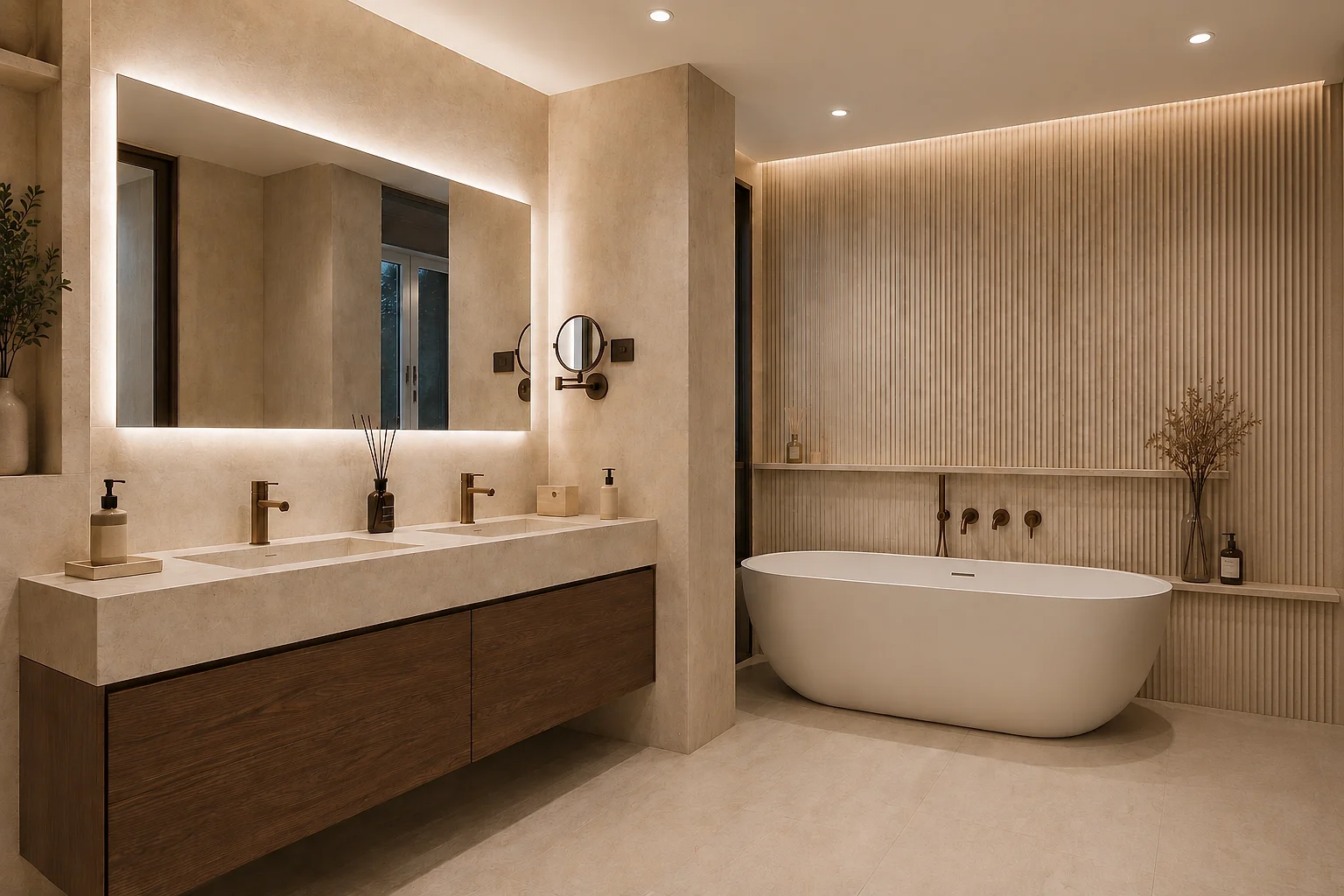
HPL Compact: thin, tough, practical
HPL Compact is a 13 mm waterproof panel with a clean white surface. It's lightweight, hard-wearing, easy to clean, and the most cost-effective integrated top. Choose a white or black core depending on whether you want an invisible or subtly defined edge.
Ceramic: premium stone look
Ceramic delivers a luxurious natural-stone appearance, is completely impervious to water and heat, and has a fixed 15 cm front height that gives the vanity real presence. It's the premium choice for a design-led bathroom.
Quick comparison
At a glance:
- Budget: HPL Compact is more affordable; ceramic is premium
- Look: HPL is clean and minimal; ceramic is rich and stone-like
- Maintenance: both are waterproof and wipe clean
- Thickness: HPL 13 mm; ceramic has a 15 cm front height
Frequently asked questions
Is HPL Compact waterproof?
Yes, HPL Compact is fully waterproof and ideal for bathroom use, with a 13 mm thickness and white surface.
How thick is a ceramic vanity top?
Our ceramic tops have a fixed 15 cm front height; the length follows your vanity width and depth is typically 50 cm.
Design yours in 3D
Configure your perfect vanity and see the price live.
Keep reading
Materials
Moisture-Resistant Materials for Bathroom Furniture, Explained
Chipboard vs multiplex, HPL Compact and ceramic worktops — which materials truly last in a…
Buying guide
How to Choose the Right Bathroom Vanity Dimensions (Complete Guide)
A practical guide to measuring your bathroom and choosing the perfect vanity width, height…