
28 April 2026 · 7 min read
Moisture-Resistant Materials for Bathroom Furniture, Explained
A bathroom is one of the most demanding environments in the home. Choosing materials built to handle humidity is what separates furniture that lasts for years from furniture that swells and warps.
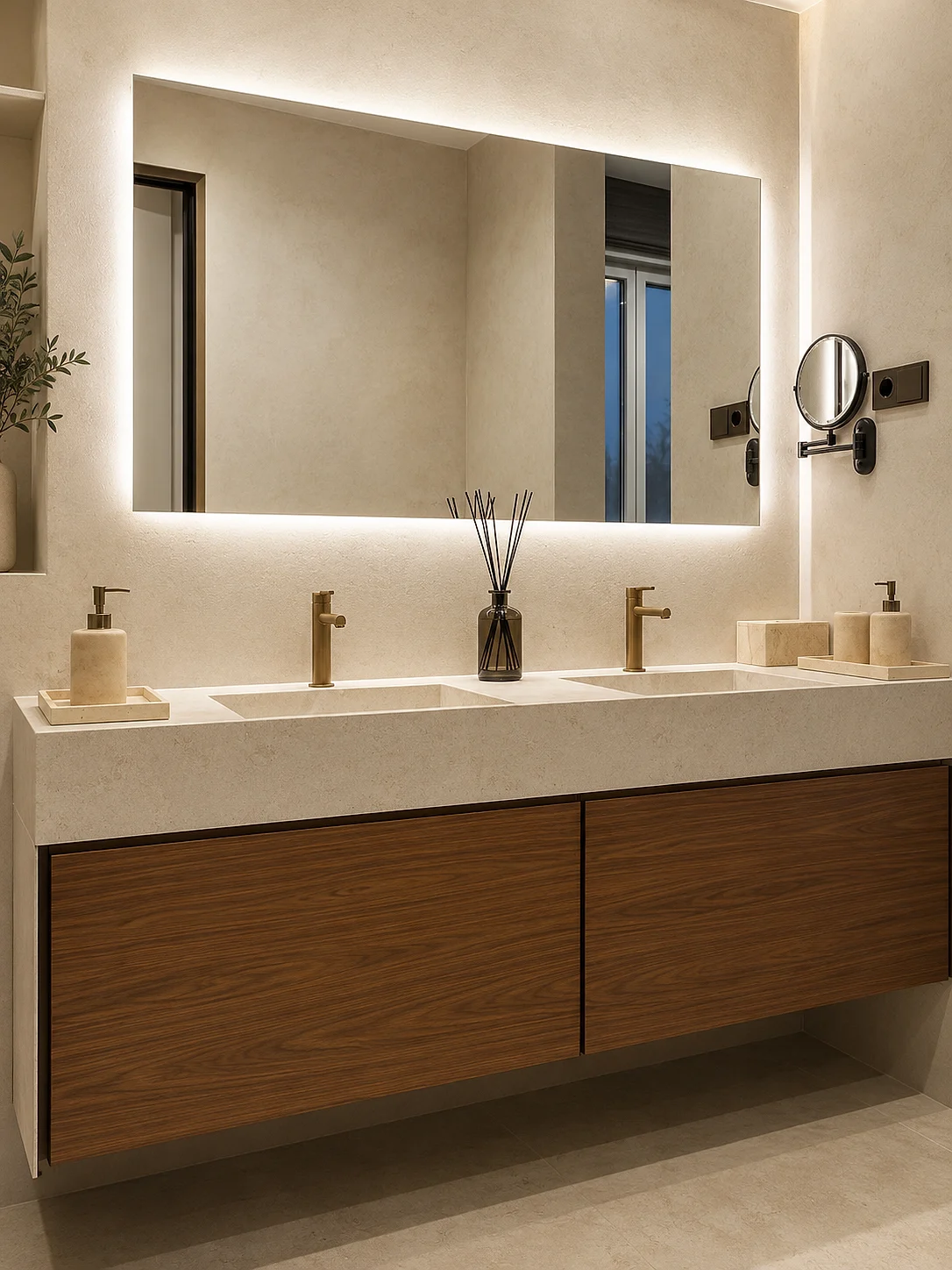
Moisture-resistant chipboard
High-quality moisture-resistant chipboard (MFC) is the reliable, cost-effective choice for most bathrooms. The core is treated to resist humidity and the melamine surface wipes clean easily.
Birch multiplex
Multiplex (birch plywood) offers superior strength and a beautiful layered edge. It handles heavy stone tops and humid spaces exceptionally well, making it the premium structural choice.
Countertops: HPL Compact and ceramic
HPL Compact is a thin (13 mm), fully waterproof, hard-wearing surface that is easy to live with — available with a white or black core. Ceramic worktops bring a premium stone look and are completely impervious to water, with a fixed 15 cm front height.
Which should you choose?
A simple way to decide:
- Tight budget, everyday use → moisture-resistant chipboard + HPL Compact top
- Heavy stone top or long double vanity → multiplex structure
- Premium, design-led bathroom → ceramic worktop
Frequently asked questions
Is chipboard suitable for a bathroom?
Yes — moisture-resistant chipboard (MFC) is treated for humid environments and is the most popular core for bathroom vanities.
What thickness is HPL Compact?
HPL Compact is 13 mm thick, fully waterproof, with a white surface and a choice of white or black core.
Design yours in 3D
Configure your perfect vanity and see the price live.
Keep reading
Buying guide
How to Choose the Right Bathroom Vanity Dimensions (Complete Guide)
A practical guide to measuring your bathroom and choosing the perfect vanity width, height…
Materials
Ceramic vs HPL Compact Countertop: How to Choose Your Vanity Top
Compare ceramic and HPL Compact bathroom countertops on looks, durability, maintenance and…